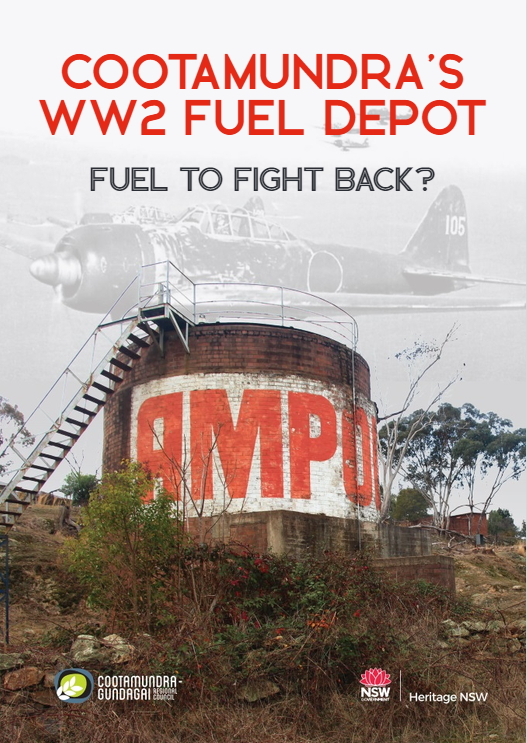
Cootamundra’s WWII Fuel Depot – A Forgotten Chapter of Wartime History
During the Second World War, Cootamundra played a quiet but important role in Australia’s wartime defence network. On the outskirts of the town, a bulk fuel storage depot was established to serve as part of the strategic inland supply chain that kept military operations moving.
The Cootamundra depot was one of several inland facilities developed by the Allied Works Council and the Department of Defence to reduce the vulnerability of fuel reserves to coastal attacks by enemy forces. With Australia facing the threat of Japanese air raids and submarine activity, storing essential aviation fuel and petrol inland provided a safer buffer for supply.
The depot itself consisted of large above-ground fuel tanks, underground storage, and pipelines, all camouflaged and guarded to reduce the risk of sabotage or detection. It was connected by rail, which meant fuel could be delivered by tanker wagons and then dispatched to airfields, military bases, and other depots across New South Wales.
After the war ended, the depot gradually became obsolete as peacetime supply systems took over. Some structures were dismantled, while remnants of the site – including concrete foundations, tank bases, and access roads – remain as reminders of its significance.
Today, although little survives intact, the Cootamundra fuel depot is remembered as part of the Wartime Inland Fuel Depot Network, which stretched across regional towns including Harden, Junee, and Temora. Together, these facilities formed a vital but often overlooked line of defence that ensured Australian and Allied forces had the resources they needed.
To learn more click here